
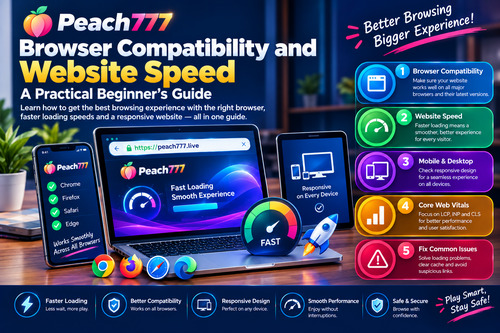
Browser Compatibility and Website Speed: A Practical Beginner’s Guide
Browser Compatibility and Website Speed: A Practical Beginner’s Guide
A website should be easy to access, navigate and read across different devices. However, browser settings, outdated software, network conditions and page design can sometimes affect the browsing experience. Understanding browser compatibility and website performance helps users identify common problems and understand what makes a website easier to use.
This Peach777 guide covers essential concepts for beginners. It provides general educational information and does not claim that any particular website has passed a technical performance test.
Understand Browser Compatibility
Browser compatibility refers to how consistently a website works across browsers such as Chrome, Firefox, Safari and Microsoft Edge. A website may display differently when browsers use different versions or support particular features differently.
When exploring peach777 information, users should keep their browsers updated and check whether page elements display correctly. Navigation menus, buttons, text and other interactive features should work without unexpected errors.
Identify Factors That Affect Website Speed
Website performance can be affected by image sizes, scripts, server response times, network quality and the amount of content a page needs to load. A slow connection can also make an otherwise well-optimised page appear slow.
Website owners can consider compressing images, reducing unnecessary code, enabling caching and reviewing hosting performance. Testing changes before and after implementation helps determine whether an improvement actually makes a difference.
Test Mobile and Desktop Layouts
Mobile responsiveness allows a website to adapt to different screen sizes. On a smartphone, text should be readable, buttons should be easy to tap and important content should not require excessive horizontal scrolling.
Readers researching peach 777 resources can check how pages appear on their own devices, while website owners should test multiple screen sizes and browsers. A layout that works on one desktop browser may still need adjustments for smaller screens.
Learn About Core Web Vitals
Core Web Vitals help website owners evaluate real-world loading performance, responsiveness and visual stability. The three key metrics are Largest Contentful Paint (LCP), Interaction to Next Paint (INP) and Cumulative Layout Shift (CLS).
Recommended good thresholds are LCP at 2.5 seconds or less, INP below 200 milliseconds and CLS at 0.1 or less. Tools such as PageSpeed Insights can help identify areas for improvement. Results may vary according to the device, network and page being tested. <Cite refs={["turn956933search0","turn956933search2"]}/>
Fix Common Browsing Problems
If a page freezes or displays incorrectly, check your internet connection, update your browser and reload the page. Clearing cached files or temporarily disabling a problematic extension may also help. Testing another browser can indicate whether the issue is browser-specific.
Readers looking for peach777 game information should avoid unfamiliar downloads and never ignore security warnings just to make a page work. Confirm the website address before signing in or sharing personal details.
Conclusion
Browser compatibility and website speed both contribute to usability. Updated browsers, responsive layouts, optimised page resources and regular performance checks can help users enjoy a smoother experience. Website owners should test actual performance across devices and use reliable diagnostic tools before deciding which improvements are necessary.